Microsoft's Earliest DOS Source Release Is More Than Retro News
Microsoft's early DOS source release became a high-interest developer story. Here is what it reveals about software history, licensing, and old code.
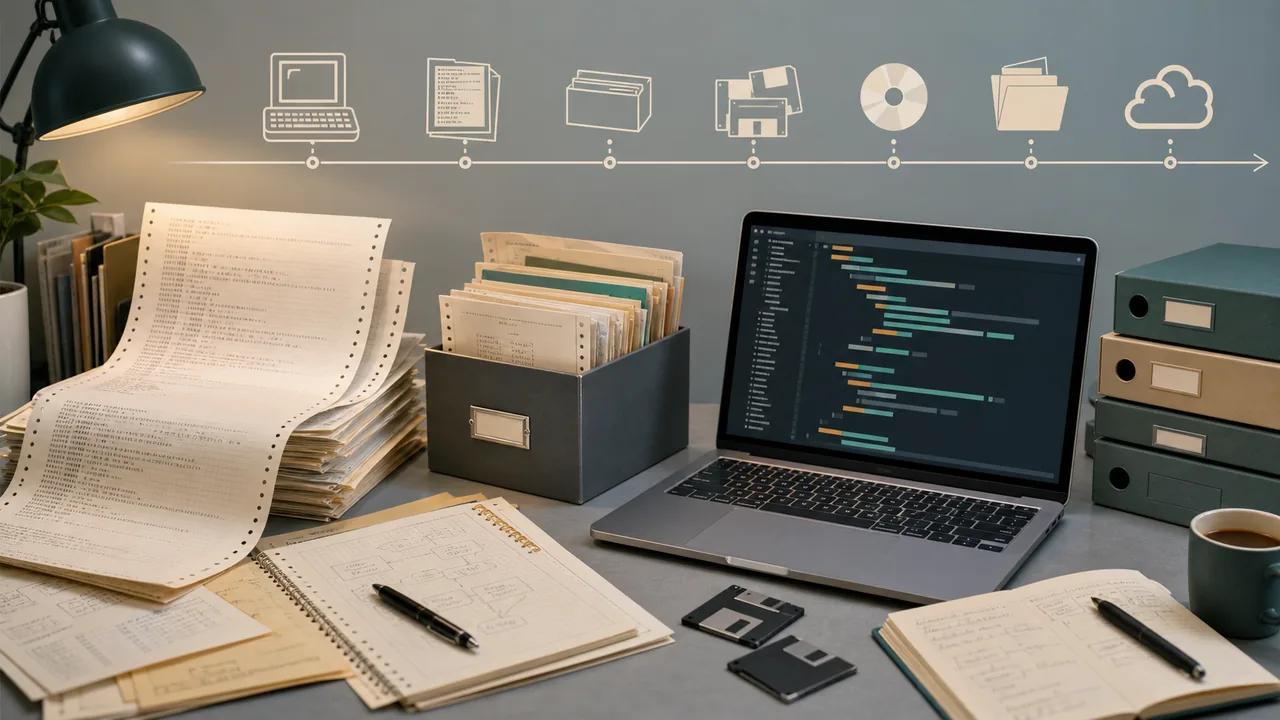
Updated May 24, 2026. Microsoft did not just hand the internet another nostalgia link. Its early DOS source release became a high-interest developer story again on the May 24 Hacker News front page, where it drew hundreds of points and more than a hundred comments. That is not the same as a raw page view count, but it is a clear public signal: programmers still care when old platform history becomes inspectable.
The release itself dates to April 28, 2026, when Microsoft marked the 45th anniversary of 86-DOS 1.00 by pointing readers to the earliest DOS source code discovered so far. The timing matters because this was not a modern product launch. It was a preservation event that happened to feel unusually current.
For a developer working in 2026, the interesting part is not whether anyone should run 86-DOS on a daily machine. Almost nobody should. The point is that a stack of printed listings can explain a software lineage more honestly than a polished anniversary post ever could.
Why The Story Popped Again
Old operating system code usually reaches a narrow audience: retro computing collectors, historians, emulator builders, and a few people who enjoy reading assembly as a weekend sport. This one traveled farther because DOS is not just an old program. It is one of the roots of the PC software world that many developers inherited without ever seeing the original material.
The Hacker News reaction shows that the story landed in more than one lane. Some people saw a museum piece. Some saw a licensing milestone. Some saw an argument for better archival practice. Others saw an uncomfortable reminder that a huge amount of computing history still depends on private collections, paper, emails, scans, and volunteers who decide to do the dull work.
That last part is the better read. The glamorous headline is that early DOS code is public. The real story is the chain of custody that made it usable: listings preserved by Tim Paterson, scanning and transcription work from historians and preservationists, Microsoft legal approval, GitHub hosting, and enough build notes for curious people to understand what they are looking at.
What Microsoft Actually Pointed To
Microsoft's open source post says the new material includes sources for the 86-DOS 1.00 kernel, several development snapshots of the PC-DOS 1.00 kernel, and utilities such as CHKDSK. The related GitHub repository describes the collection as Tim Paterson's DOS printouts, with transcription files, printed-file extracts, and compilable source code separated into different folders.
That separation is important. The raw listing is not the same as a cleaned source tree. The printable artifact is not the same as the buildable artifact. The repository layout makes that distinction visible instead of pretending the paper era maps neatly onto a modern project folder.
The collection also includes assembler material and Microsoft BASIC-86 Compiler runtime library material, though the GitHub README notes that not every bundle has been transcribed yet. In other words, this is not a finished historical monument. It is a release with gaps, context, and a record of what still needs work.
Microsoft's older MS-DOS repository remains separate. That archived repo contains source code for MS-DOS 1.25, 2.0, and 4.0 for historical reference. The newer Paterson Listings collection reaches earlier into the path that led to PC-DOS and MS-DOS, and Microsoft says the maintainers worked with the company to make the material available under the MIT license.
The Paper Trail Is The Product
The most useful part of the release may be the least convenient one: the code came from printed listings.
Modern developers are trained to think of history through commits, pull requests, release tags, issue threads, and CI logs. Early DOS development did not leave that kind of trail. It left paper, dates, diffs, handwritten context, and print quality that had to be interpreted. A folder of source files alone would hide that reality.
That matters because software history often gets retold as a sequence of clean milestones. First this version, then that version, then a commercial deal, then dominance. The listings show a messier process: snapshots, utilities, assembler constraints, partial material, and working states that only make sense when the surrounding artifacts are kept with the code.
The better move is to treat the release as an archive, not just a repo. A repository answers the question, can I browse the code? An archive asks harder questions: where did this material come from, what was transcribed, what remains untranscribed, what tools are needed to rebuild it, and what does the paper record show that a clean source file would erase?
Why Developers Should Care In 2026
This story may feel far away from today's AI tools, cloud apps, and browser platforms. It is closer than it looks.
Every software team has systems whose real history lives outside the neat interface. It may be in an old release branch, an exported wiki, a build server nobody wants to touch, a migration note, a retired laptop, or a senior engineer's memory. The DOS release is a dramatic version of a common problem: code without context is only partly preserved.
There are a few practical lessons hiding in the retro appeal:
- Keep source material, build notes, and licensing information together.
- Label raw, cleaned, and buildable artifacts as different things.
- Preserve the tools needed to understand old code, not only the code itself.
- Do not wait until a system becomes historically important before writing down how it was made.
For a small team, that does not mean building a museum around every script. It means being honest about the files that would become unreadable if one person left or one service disappeared. The fragile part of software is often not the code. It is the explanation around the code.
What Not To Overread
This is not Microsoft opening every version of DOS. It is not a sign that old proprietary platform history will now become open by default. It is not a maintained operating system project. The MS-DOS repository explicitly frames its contents as historical reference and asks people not to submit pull requests that modify the old source files.
It is also not a simple story about source availability solving preservation. Public code is a start. It does not automatically preserve the development environment, the original media, the social context, or the legal clarity needed for researchers to use the material confidently.
There is a temptation to turn every old code drop into a debate about whether the software was elegant, crude, visionary, or embarrassing. That is the wrong first question. Early systems were built under constraints that modern readers rarely feel: memory limits, assembler workflows, hardware targets, paper documentation, and compatibility pressure that arrived before the platform had even settled.
The fairer question is what the artifact can prove. Here, it can show earlier working states, real file names, dates, utilities, assembler assumptions, and parts of the path from 86-DOS toward the IBM PC era. It cannot, by itself, settle every argument about business history, influence, or alternative timelines.
A Better Way To Read The Drop
For most people, the best route is not to compile it first. Start by looking at the repository layout. Compare the transcription folder with the printed files and the source code folder. Read the README before jumping into assembly files. Notice where the maintainers call out incomplete transcription work.
Then pick a narrow thread. CHKDSK is easier to reason about than the entire operating system. A dated kernel snapshot is easier to compare than a broad narrative about DOS. A build note can be more revealing than a famous file name.
That approach keeps the release from becoming a blur of old labels. It also respects the archival work. The point is not to turn paper into a decorative GitHub link. The point is to make the material understandable enough that future readers can check claims against artifacts.
That is why the GitHub repository's plain structure is useful. It does not only say, here is the code. It says, here is the raw transcription, here are the printed files extracted from it, here is the source code you may want to assemble, and here are the scans if you want to inspect the original basis.
The Bigger Preservation Lesson
The DOS release is a reminder that software outlives the assumptions around it. A build that once felt ordinary can become impossible to reproduce. A printout that once looked like clutter can become the best surviving record. A license question that was irrelevant inside one company can become the difference between private nostalgia and public study.
That is the part worth carrying into current work. Today's systems will leave their own gaps: generated code, hosted dashboards, private chat decisions, cloud-only logs, issue trackers that vanish after an acquisition, and AI-assisted changes whose prompts are not recorded anywhere durable.
The early DOS material survived because people kept more than a binary. They kept listings, correspondence, scans, context, and permission paths. The same idea applies now, even if the tools have changed.
Old code releases are easy to treat as weekend entertainment. This one is better than that. It shows that software history becomes useful when the artifact, the context, and the right to study it arrive together.