Apple Just Made the Model the Easy Part: Foundation Models Opens to Any LLM, with Claude and Gemini on the Way
Apple's Foundation Models framework went provider-agnostic at WWDC 2026 — one Swift protocol for any LLM. What it really means for developers.
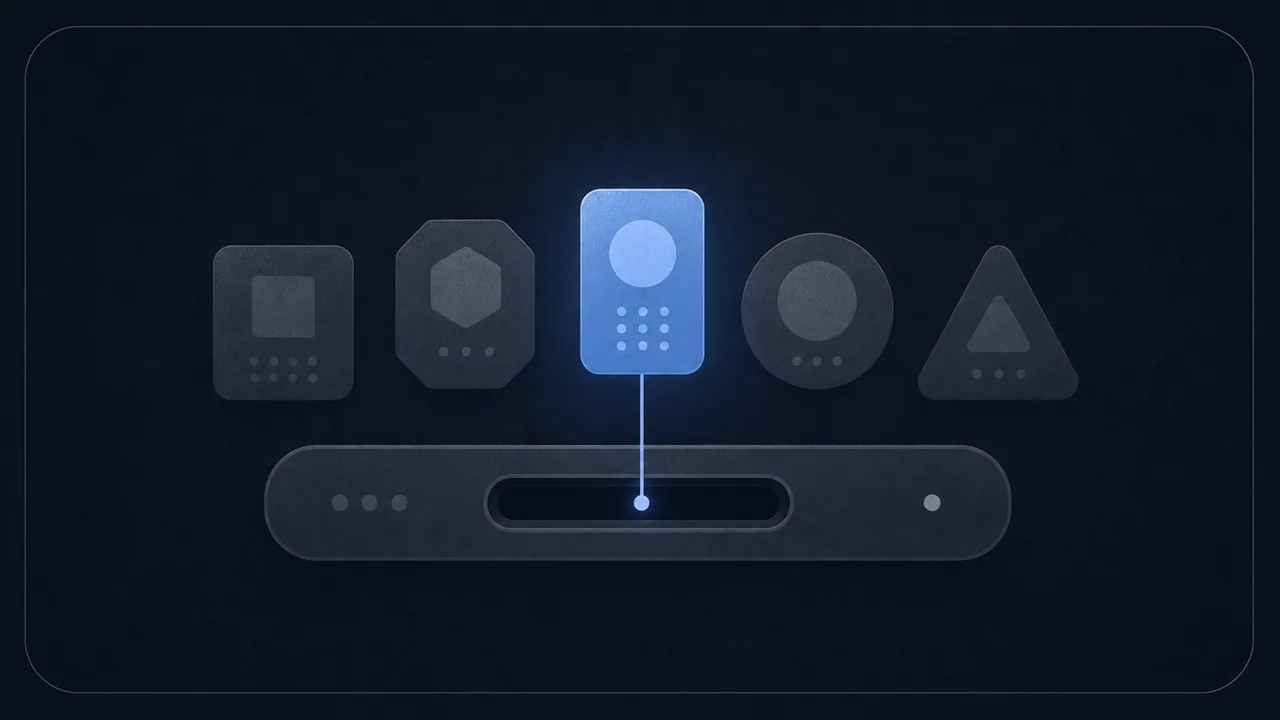
The headline most people took from Apple's 2026 developer keynote was that its on-device model got a little better. The change that matters most for a developer is one layer down, in the Foundation Models framework, and it points in a direction Apple has avoided for years — the company is no longer insisting that apps on its platforms talk to *Apple's* model. As of this year's releases, the same Swift API that an iOS app uses to call the built-in Apple Intelligence model can drive an open-weights model running locally or one you trained yourself — and, through partner packages Apple has announced, Claude or Gemini are meant to slot into that same interface, with switching between any of them designed to be close to a one-line change. That is a quiet concession about where Apple thinks the value now sits — it helps you on balance, but the one catch is where that help stops — and it is worth reading carefully before you decide what it means for your app.
What actually shipped
Foundation Models arrived a year ago as a narrow thing: a Swift framework for calling Apple's own small on-device model, with guided generation and tool calling, and not much else. The 2026 version reframes it as a provider-neutral interface. Apple introduced a LanguageModel protocol that any model can conform to; to wire up a new backend you implement a LanguageModelExecutor that translates the framework's Transcript into whatever your inference engine speaks, and from then on the model plugs into the same LanguageModelSession your code already uses. In Apple's own session demonstrating this, the entire swap from one model to another is a single line — let session = LanguageModelSession(model:) — with everything downstream, the prompts, the structured-output decoding, the tool definitions, left untouched.
The set of things you can drop into that slot is the real story. The built-in options are Apple's improved on-device System Language Model and, now reachable through the same protocol, the more capable model that runs on Apple's Private Cloud Compute. It adds two open-source executors — CoreAILanguageModel and MLXLanguageModel — so you can run an open-weights model on the Neural Engine or the GPU through the same protocol. And it has lined up Anthropic and Google as launch partners who will publish their own Swift packages, meaning a developer will be able to add Claude or Gemini to a project through Swift Package Manager and call it through Apple's interface rather than hand-rolling each vendor's HTTP API. The framework also grew up in the ways a serious LLM client has to: multimodal prompts so a model can reason over an image, per-token usage reporting that separately counts cached and reasoning tokens, a defined LanguageModelError set for the unglamorous cases like rateLimited and contextSizeExceeded, and explicit guidance to keep provider credentials in the Keychain and attest the device with App Attest rather than shipping a bare API key in the binary. Two smaller additions round it out: Dynamic Profiles, which let an app swap models, tools, and instructions mid-session, and the ability for a model to call on-device Vision tools such as OCR and barcode reading directly.
There is also a commercial sweetener that tells you how badly Apple wants developers to build on this surface rather than around it. Apple said developers whose apps have fewer than two million first-time App Store downloads get free access to its Foundation Models running on Private Cloud Compute — the server tier, not just the on-device model. For a large share of indie and mid-size apps, that removes the line item that usually decides whether an AI feature ships at all.
Why this is a strategic retreat dressed as a feature
It is tempting to file this under "Apple added LLM support," but that undersells what changed in Apple's posture. For most of the Apple Intelligence era the implicit deal was that if you wanted system-grade, privacy-preserving AI on an iPhone, you used Apple's model, on Apple's terms, and you waited for Apple's model to get good enough for your use case. Plenty of developers found it wasn't, and went off-platform to OpenAI or Anthropic directly, which left Apple's framework looking like a toy next to what those apps actually shipped. The provider-agnostic redesign is Apple accepting that it cannot win the model itself — not this year — and choosing instead to own the layer above it: the Swift-native interface, the secure-credential and on-device-attestation story, the usage metering, and the distribution. If the model is going to be Claude or Gemini regardless, Apple would rather you reach it through LanguageModelSession than through a third-party SDK it has no hand in.
The same move others already made, from a stronger position
That is a familiar move, and not only for Apple. The same logic produced the Model Context Protocol, where the industry agreed on one way to connect agents to tools precisely because no single vendor could dictate the model, and it produced WebMCP in the browser. In each case the interesting power is not the model but the standard interface in front of it, because whoever owns that interface owns the developer's defaults, the telemetry, and the switching cost. Apple is late to this realization and is making the same bet from its strongest position — a controlled platform, a real privacy story in Private Cloud Compute, and a hundreds-of-millions-of-devices distribution channel that no model vendor has.
The judgment worth committing to is this: the provider-agnostic framework is a bigger deal than any benchmark number Apple quoted, and it is good for developers on net, but it is not the open door it looks like. You are getting genuine freedom to choose a model and a much cleaner path to ship a paid-grade AI feature without standing up your own backend. You are also being invited deeper into a framework that only exists on Apple's platforms, metered by Apple, attested by Apple's hardware, and free only up to a download threshold Apple sets and can move. That is a reasonable trade for a lot of apps. It is still a trade, and the convenience is the hook.
What it changes for the developer deciding right now
If you build for the Apple platforms and you had already given up on Foundation Models, this is the release that earns a second look, because the reason you left — being stuck with one underpowered model — is the specific thing that changed. An app that needs a frontier model for a hard task and the on-device model for cheap, offline, private work can now hold both behind one session type and route between them, instead of maintaining two integrations. The free Private Cloud Compute tier makes that especially attractive below the two-million-download line, where backend cost is usually the blocker.
What I would not do is treat "swap in one line" as a reason to stop thinking about which model you ship. The interface being uniform does not make the models interchangeable: Claude, Gemini, Apple's on-device model, and an open MLX model differ in cost, latency, refusal behavior, and what they are good at, and the abstraction that makes them easy to swap also makes it easy to ship the wrong one without noticing — so verify which model you actually shipped, not just that the call compiles. The Anthropic and Google packages are announced rather than something you can lean on in production today, so a launch plan that assumes them is a plan with a dependency on someone else's ship date. And the whole thing requires this year's OS releases — iOS 27, macOS 27, and their siblings, with the framework's Swift Package targets set to a .v27 minimum — which means a real install-base wait before you can require it.
The clean way to read Apple's announcement is that it stopped trying to sell you its model and started trying to sell you its framework — and for once, that is the better product. Adopt it for the freedom it genuinely gives you, and stay honest that the freedom runs only as far as the edge of Apple's platform.
Source links
- Apple Developer — Foundation Models framework documentation
- WWDC26 session — Bring an LLM provider to the Foundation Models framework
- WWDC26 session — What's new in the Foundation Models framework
- MacRumors — Apple outlines major AI and developer-tool updates at the 2026 Platforms State of the Union