ChatGPT's New Dreaming Memory Remembers More — and Shows You Less
OpenAI's dreaming update makes ChatGPT memory sharper and automatic. Its own FAQ says the reviewable summary won't show everything. Here's the trade.
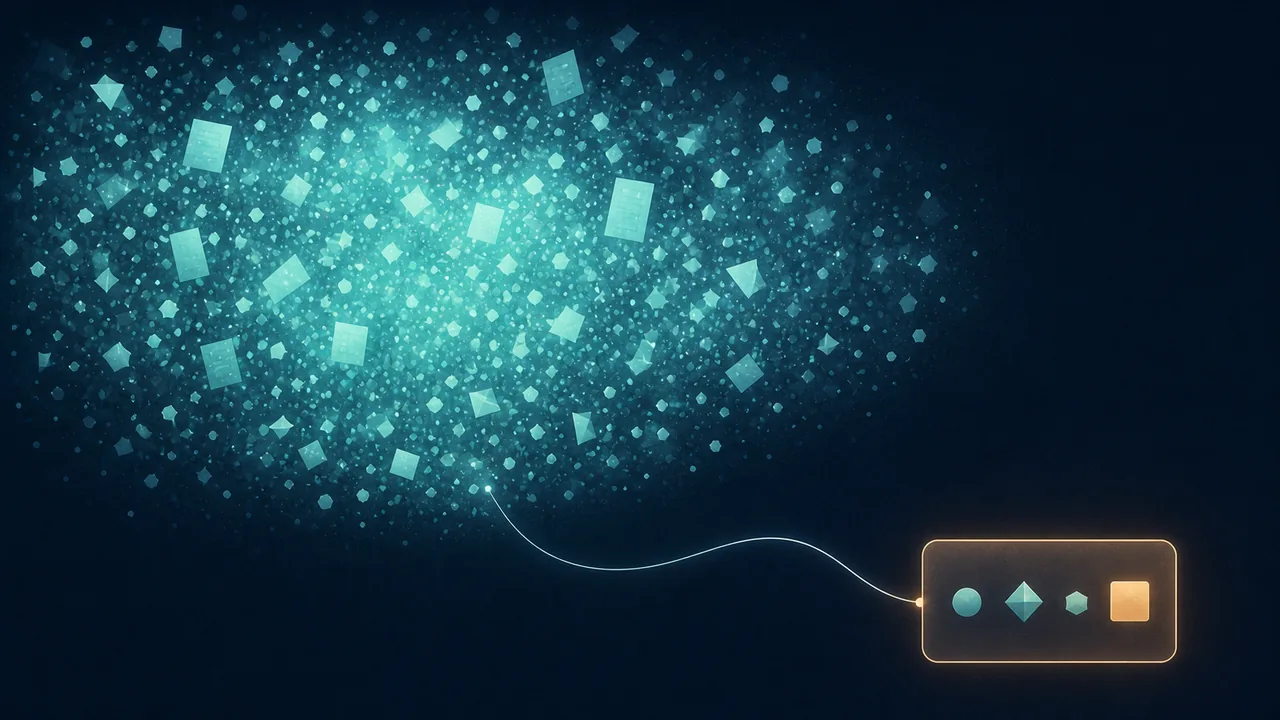
OpenAI just shipped the best memory ChatGPT has ever had, and quietly demoted the version you could read as a plain list to a legacy setting. The launch post tells you the first half of that sentence. The FAQ holds the second — and the second half changes the decision rule for how you use the product.
Start with what shipped. On June 4, OpenAI began rolling out a memory architecture it calls dreaming — a background process that reads across your conversations and synthesizes what ChatGPT should remember about you, no "remember this" required. It replaces the hand-curated saved-memories list as the foundation of the system, starting with Plus and Pro users in the US and expanding to Free and Go plans and more countries over the coming weeks.
The engineering case is real
Give the launch post its due. In OpenAI's internal evaluations, factual recall climbed from 67.9 percent under last year's hybrid system to 82.8 percent, and preference adherence rose from 55.3 to 71.3.
The sharpest gain is the one that mattered most. On "staying current over time" — does the system eventually notice your trip ended — the original 2024 saved-memories notepad scored 9.4 percent. Dreaming V3 scores 75.1, and OpenAI's example is exactly the right one: "You're going to Singapore in July" becomes "You went to Singapore in July 2026" without you touching anything.
Plus and Pro accounts also get twice as much memory capacity, and OpenAI says recent work cut the compute needed to serve dreaming to free users by roughly 5x. This is the rare personalization launch where the published numbers describe a problem users actually had.
Now read the FAQ instead of the launch post
The saved-memories list — the discrete entries you could open in settings under Manage memories and delete one by one — is no longer the system of record. In its place is a memory summary page, and OpenAI is candid about what it is: the summary "will not include everything that ChatGPT remembers based on your chats." Some details may not appear at all, "including when ChatGPT determines they are less relevant or not appropriate to show in this view."
Want to know whether ChatGPT remembers something specific? In practice, the documented answer is to "just ask in chat." The audit interface for the machine's memory of you is now the machine.
The correction tools have the same shape. Highlight a line in the summary and choose "Don't mention this again," and ChatGPT "will work to avoid bringing up that detail" in future replies — but, the FAQ says plainly, "it does not delete the information." Suppressing a detail and removing it are different operations now, and only one of them is cheap.
Actual deletion has become an excavation. To fully remove something, OpenAI's instruction is to "delete every source where it appears, including past chats, archived chats, files, the memory summary, and disconnect any connected apps that may contain that information." Read that list twice. It includes your files and your connected apps, because memory now draws on those too.
There is a genuinely useful new transparency surface: tap the book icon under a response and a sources view shows which memories, files, and custom instructions shaped it. The FAQ hedges this one the same way — it "may not show every factor or source that shaped a response."
Name the trade honestly
None of this is hidden. Every quote above sits in OpenAI's own help pages, in plain language, which is more candor than most personalization systems manage.
And some of it is the honest cost of the design rather than a choice. A synthesis cannot be itemized the way a notepad can, any more than you could print a complete list of your impressions of a coworker. Better recall and a fully enumerable memory were probably never both on the table.
But that is precisely why the trade deserves a name. The readable part of ChatGPT's memory — the saved-memories list — was never the whole of what the model could draw on, especially once chat-history referencing arrived in 2025. It was, however, the system of record you could check, and its replacement is a profile you can only query.
"Reviewable" survived the transition mostly as a word.
What to do about it this week
Open Settings > Memory and actually read your summary. It carries a freshness stamp like "2 hours ago," and there is a text box at the bottom where typed corrections take effect directly. If something specific matters to you, verify it the way the FAQ itself suggests: ask in chat. If a curated summary is now the only window you get, the least you can do is look through it on purpose.
Use a Temporary Chat for anything you would rather not have remembered at all — those neither use existing memories nor create new ones. And check "Improve the model for everyone" under Data Controls while you are in there, because the training setting and the memory setting are independent; changing one does nothing to the other, a detail that matters if you assumed one switch covered both.
If the legible list matters more to you than recall quality, the escape hatch exists: Settings > Memory still links a revert to the legacy saved-memories system. "Legacy" is OpenAI's word for it, not mine — draw your own conclusion about the long-term plans.
The same June 4 release notes are worth thirty more seconds while you have settings open. Lockdown Mode became available to every logged-in account — an opt-in setting that restricts web browsing, deep research, agent mode, and file downloads to cut the risk of prompt-injection data exfiltration — and it slots naturally into the kind of review covered in our ChatGPT account-security walkthrough. On June 10 the model picker also collapsed into Instant, Medium, and High, plus three Pro-only tiers, with Thinking Light retired.
Zoom out once and the week looks coherent. The same days OpenAI made ChatGPT's memory of you deeper and harder to enumerate, Anthropic attached a mandatory 30-day retention window to Claude Fable 5 that overrides even zero-retention agreements. Assistants are getting more personal, and the controls around that intimacy are getting more conditional — at the same time, from more than one vendor.
Dreaming is good engineering, and I would leave it on. Just update your mental model along with the software: a memory you can read is a record, and a memory you can only ask about is a relationship. OpenAI is moving hundreds of millions of people from the first to the second, a few plans at a time.