Signal Usernames: Phone Number Privacy Without Mistaking It for Anonymity
A privacy guide to Signal usernames, phone number visibility, discovery settings, message requests, identity checks, and realistic limits.
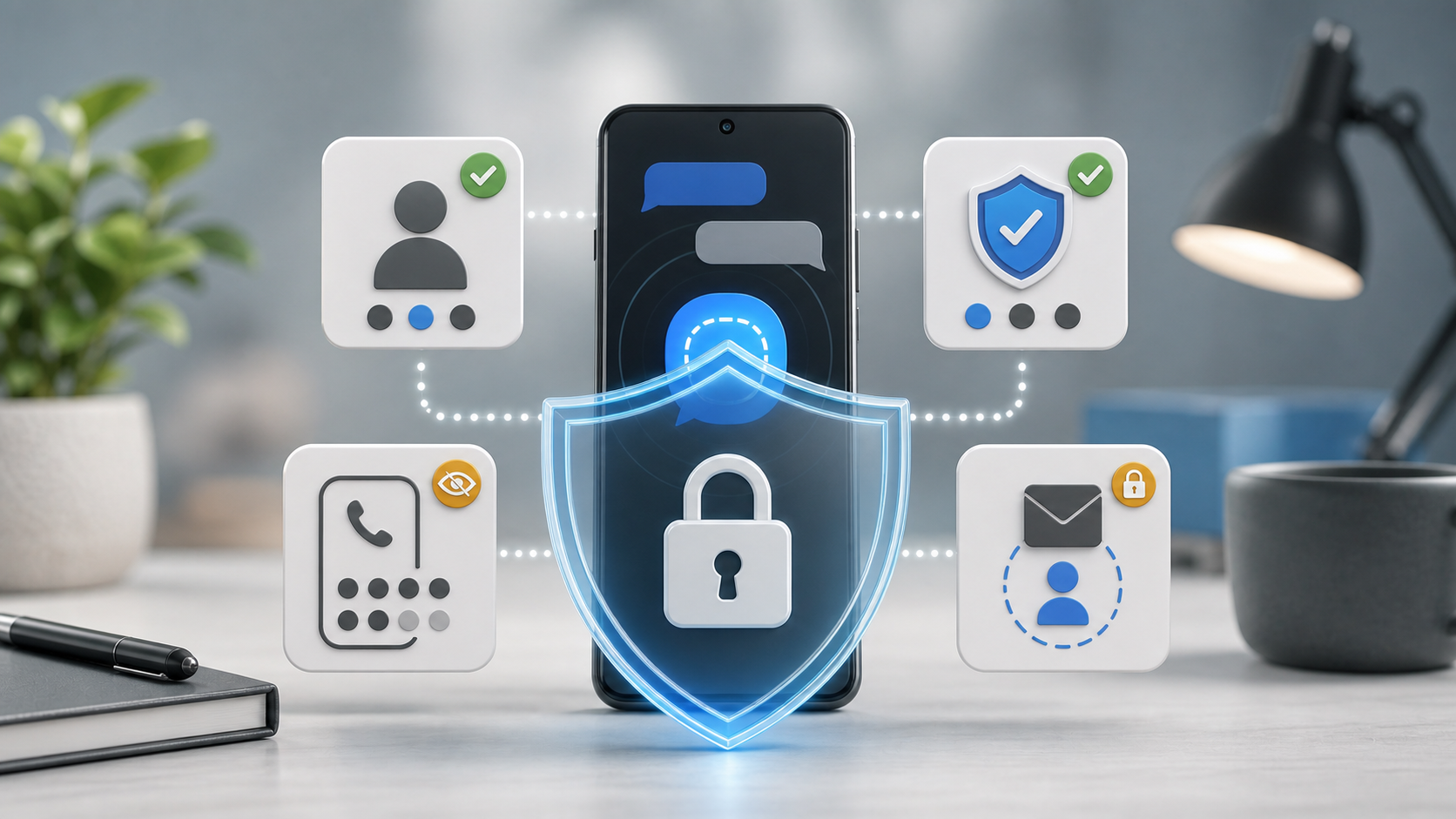
Updated May 18, 2026. Signal usernames change how someone can start a conversation with you. They are useful for reducing phone-number exposure, but they should not be confused with anonymity or with proof that the other person is who they claim to be.
The Contact Path Changes
Signal's official blog introduced usernames as a way to connect without sharing your phone number. If you create a username, someone can use that username to start a Signal conversation with you. Signal also lets users generate a QR code or link tied to the username, which can be shared when typing a handle is inconvenient.
The important detail is that a username is only a contact-starting mechanism. Signal's support documentation says people you chat with do not see your username in the conversation. They see your profile name and profile photo, depending on what you share.
Signal usernames are also changeable. They are not meant to become a permanent social handle like a public account name on a social network. Signal's blog says usernames must be unique and include two or more numbers at the end, a design choice intended to reduce spoofing and keep usernames more egalitarian.
For readers, the simplest rule is this: use a username when you want someone to reach you on Signal without learning your phone number, but do not treat the username as a public identity badge.
Visibility And Discovery Are Different
Signal's phone number privacy controls have two separate ideas:
- Who can see your phone number.
- Who can find you by phone number.
Those are not the same thing. Hiding your number from people you chat with does not necessarily mean nobody can find your account by number. Preventing discovery by number can also make it harder for people who already know your number to start a chat unless you share your username or QR code.
Signal's support documentation explains that users can choose who sees their phone number and whether people can find them by phone number. If you choose stronger phone number privacy, you may need to give someone your exact unique username to start a connection.
Before sharing a username, check both settings. If you only check one, you may get a privacy result you did not expect.
Best-Fit Use Cases
Usernames are most useful when the phone number is more sensitive than the conversation itself.
Examples include:
- A freelancer who wants clients to reach them on Signal without exposing a personal number.
- A community organizer who wants a safer intake channel.
- A journalist, researcher, or creator who wants to avoid putting a phone number in public bios.
- A person joining a short-term group where not everyone needs permanent contact details.
- Someone dating or selling locally who wants to avoid sharing a number too early.
In these cases, the username gives users a middle path. They can make Signal reachable without making their phone number part of the first exchange.
The feature can also be useful for people who have changed phones, separated work and personal contact paths, or want to reduce the spread of a number that is already tied to bank accounts, email recovery, or public databases.
Where Users Misread The Feature
Usernames can also confuse people who expect Signal to work like older phone-based messaging.
If someone cannot find you by phone number because you changed the “who can find me” setting, they may think your Signal account does not exist. If you change your username, an old link or QR code may stop being useful. If you use a pseudonymous profile name, a new contact may not immediately know whether they are talking to the right person.
That is why usernames should be paired with clear verification habits. If the conversation is important, confirm identity through another trusted channel or compare safety numbers.
Signal's deeper support article emphasizes that phone number privacy and usernames do not replace safety numbers. Safety numbers are still the way to verify that a conversation is with the intended person and that the secure session has not changed unexpectedly.
Before Sharing A Username Publicly
Before sharing a Signal username, run this checklist:
- Create a username you are comfortable changing later.
- Review “Who can see my phone number.”
- Review “Who can find me by phone number.”
- Decide whether you want a username link or QR code.
- Check your profile name and profile photo before public sharing.
- Decide whether the username should be shared publicly or only one-to-one.
- For sensitive contacts, verify identity with safety numbers.
- Know how to block message requests.
- Revisit the settings after changing jobs, phone numbers, or public contact pages.
This checklist is especially important if you plan to publish a Signal username on a website, newsletter, social profile, or business card. Public sharing can make contact easier, but it may also increase spam, unwanted messages, or impersonation attempts.
Message Requests Are The Boundary
Signal uses message requests when someone new contacts you. That matters because usernames can make you easier to reach.
If a contact request is unwanted, Signal says you can block it. According to Signal's support documentation, blocking a request prevents that person from contacting you again even if they change their username.
This is an important safety feature for public-facing usernames. A username link can be shared widely, but you still have a boundary at the message request stage. Do not accept requests just because the person used the correct handle. Review the profile information, context, and whether you expected the contact.
If the message is threatening, manipulative, or tries to move you quickly to another platform, stop responding and preserve evidence if needed. Signal is private messaging, not a trust guarantee.
Identity Still Needs Verification
Phone number privacy can make Signal more comfortable to share, but it can also reduce one familiar identity clue: the phone number itself. That makes verification more important.
For ordinary conversations, context may be enough. For sensitive work, money, private information, organizing, source communication, or safety planning, verify separately.
Signal safety numbers exist for this reason. You can compare safety numbers in person, over a trusted call, by email, or through another channel you already trust. If a safety number changes unexpectedly, pause and verify before sharing sensitive information.
This does not mean every Signal chat is dangerous. It means usernames shift the first-contact process from “I know this number” to “I know this person reached me through a handle.” That is useful, but it changes the verification habit.
What The Handle Cannot Promise
Usernames do not make Signal anonymous. Signal still requires a phone number for registration. A username does not hide your profile name or profile image from someone after you send or accept a message request. It does not prevent someone from taking screenshots, forwarding information manually, or describing what you said.
Usernames also do not create a searchable public directory. Signal's blog says it does not operate a public searchable directory of usernames. That is good for privacy, but it also means people need the exact username, link, or QR code to start contact if phone-number discovery is limited.
Do not use a Signal username as if it were a secure public mailbox. If you publish it widely, expect more message requests. If you need a highly controlled contact path, share it only with intended people and rotate it when needed.
The Strongest Use Case
The best use case for Signal usernames is controlled reachability.
You can let someone reach you without giving them your phone number. You can change the username later. You can block unwanted requests. You can keep phone number visibility and discovery tighter than before. Then, if the conversation becomes important, you can verify the person using safety numbers or another trusted channel.
That is a useful privacy improvement for many readers. It is not magic anonymity. It is a practical way to reduce unnecessary phone number exposure while keeping Signal usable.
FAQ
Do I still need a phone number to use Signal?
Yes. Signal still requires a phone number to register. Usernames are for starting conversations without sharing that number with the other person.
Can people in a chat see my Signal username?
Signal says your username is not visible to people you are chatting with. They see your profile name and profile photo according to your sharing settings.
Is a Signal username permanent?
No. Signal usernames are changeable. They are not meant to be permanent public handles.
Can someone find my phone number from my username?
Signal's design is meant to let people start a conversation from a username without seeing your phone number, subject to your privacy settings. You should still review both phone-number visibility and phone-number discovery settings.
Do usernames replace safety numbers?
No. Usernames help with contact discovery. Safety numbers are still used to verify that you are communicating with the intended person through a secure session.